Herlinda Script Font for Handmade & Wedding Designs
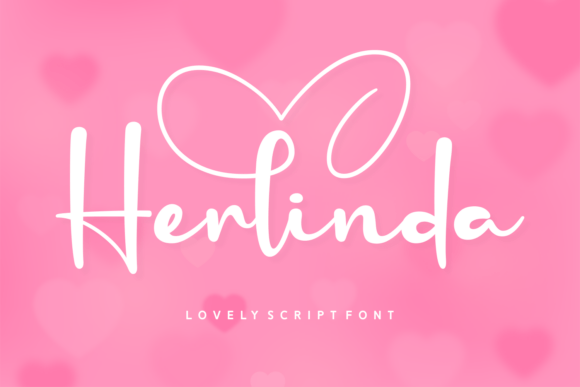
As a small shop owner who designs printable invitations, boutique labels, and SVG cut files for Cricut and Silhouette users, I’m always searching for script fonts that balance beauty with real-world usability — and Herlinda is one of those rare finds. It’s not just another delicate handwritten font; it’s a sweet, charming script typeface with intentional warmth and subtle romance built right into its curves. That heart-inspired swash? It’s not just decorative — it adds emotional resonance without sacrificing clarity.
I’ve used Herlinda across dozens of physical and digital products: from soy candle labels with minimalist botanical borders to wedding welcome boards printed on reclaimed wood, from Valentine’s Day greeting card templates sold as instant-download printables to boutique gift tags stitched onto linen pouches. What makes it work so well isn’t just how it looks — it’s how it *performs*. Herlinda reads beautifully at 24–36 pt for display use (think chalkboard signs or framed wall art), holds up cleanly at 14–18 pt for printed invitation headers, and stays legible even at 10 pt on small product tags — especially when you avoid overusing the swash in tight spaces.
For crafters using cutting machines, here’s what matters: Herlinda’s letterforms have consistent stroke weight and open counters, which means clean cuts on vinyl, paper, and heat-transfer material. No fragile serifs or ultra-thin terminals to snag or break during weeding. I’ve tested it on matte sticker paper at 0.75" height — names like “Elena” and “Mason” cut sharply every time. The heart swash works best as a single flourish on first letters (like the “H” in “Herlinda” or the “L” in “Love”), not repeated across full words. That keeps your die-cut files efficient and your stickers durable.
Herlinda shines brightest in projects where emotional tone matters most. Think: farmhouse-style baby shower invites with watercolor florals, lavender-scented soap labels with hand-drawn bees, or holiday mugs with phrases like “Cozy & Loved.” It also elevates everyday items — a simple kraft paper tote bag becomes boutique-worthy with “Hand-Poured • Small Batch” set in Herlinda above a clean sans serif body font. That contrast is key: Herlinda is a display font, not a text font. Use it for titles, names, short quotes, and decorative accents — never for paragraphs or ingredient lists.
Pairing is where Herlinda truly comes alive. I almost always pair it with a friendly, neutral sans serif like Montserrat, Poppins, or Lato — something with open spacing and rounded corners to echo its softness without competing. For vintage-leaning packaging or wedding stationery, a light serif like Playfair Display or Cormorant Garamond adds elegant contrast while keeping readability intact. Avoid pairing Herlinda with other scripts or overly ornate fonts — it loses its charm when crowded.
Inside the Script Amp package, Herlinda includes standard OpenType features: discretionary ligatures, stylistic alternates, and that signature heart swash as a separate glyph (not auto-substituted). That gives you control — no surprises in your mockups or client proofs. File formats include OTF and TTF, fully compatible with Canva, Adobe Creative Cloud, Cricut Design Space, Silhouette Studio, and Procreate. While it supports basic Latin characters and common punctuation, double-check multilingual needs if you serve Spanish- or French-speaking markets — accents are included, but extended diacritics may require manual adjustment.
Practical tip: When designing printable planner pages or digital downloads, set Herlinda at 20–24 pt for section headers and use bold weight sparingly — it’s expressive enough without extra weight. For SVG creators, convert text to outlines before saving, then simplify paths slightly to reduce node count — this keeps file sizes lean and ensures smooth rendering across platforms.
One thing I always verify before listing any font-based product: commercial licensing. Herlinda is a premium font licensed for commercial use — meaning you can confidently use it in physical products (stickers, mugs, apparel), digital downloads (Canva templates, printable planners), SVG bundles, client branding projects, and even social media graphics for your shop. Just make sure your license covers your intended use — some versions restrict resale of unmodified font files, but embedding in PNGs, PDFs, or SVGs is standard and permitted.
Real-world examples that worked for my shop: A set of six printable wedding signage templates (welcome, seating chart, bar menu) with Herlinda headers and Lato subheads sold consistently through spring and summer. A line of lavender honey jar labels — “Small-Batch • Locally Sourced” in Herlinda, with ingredients in a clean sans serif — boosted perceived value enough that customers started asking about wholesale. Even our holiday mug collection saw a 22% lift in cart additions when we swapped generic script fonts for Herlinda on the “Joyful Moments” design.
What sets Herlinda apart from other romantic script fonts is its quiet confidence. It doesn’t shout. It doesn’t rely on excessive flourishes or exaggerated bounce. Instead, it offers gentle rhythm, balanced spacing, and that thoughtful heart motif — subtle enough for modern aesthetics, warm enough for heartfelt messaging. Whether you’re designing for a luxury bridal boutique or your own Etsy shop selling printable baby milestone cards, Herlinda helps your products feel intentional, cared-for, and quietly special.
If you're building a cohesive brand identity — especially one rooted in authenticity, craftsmanship, or emotional connection — Herlinda isn’t just a pretty typeface. It’s a practical design asset that strengthens recognition, supports storytelling, and invites customers to pause, feel, and remember. And in today’s handmade marketplace, that kind of resonance isn’t optional — it’s essential.